Insulation and Refractory
What is Insulation?
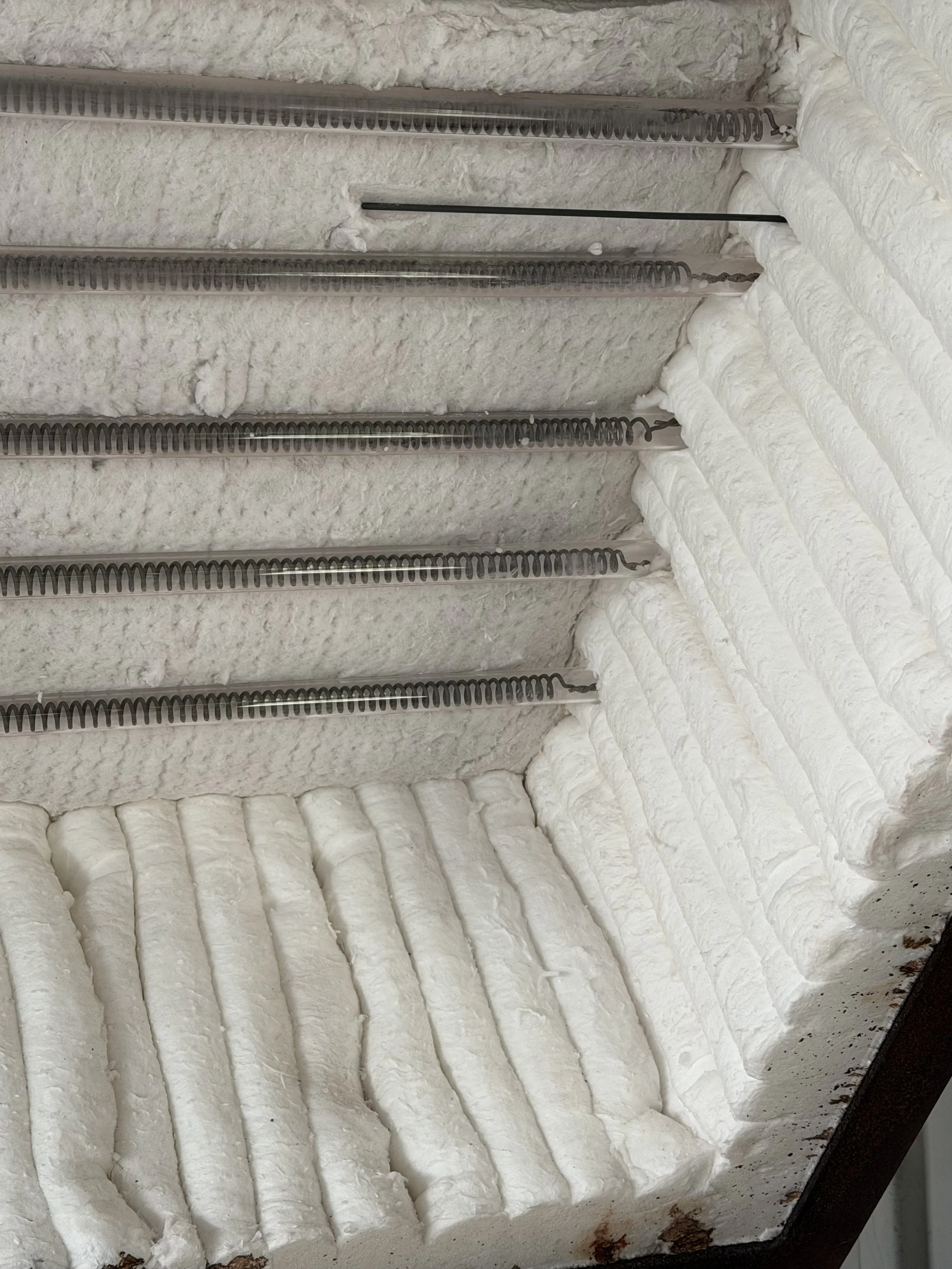
Insulation refers to materials that reduce heat loss by acting as a barrier against the transfer of heat energy.
Heat naturally moves from warmer to cooler areas through conduction, convection, and radiation. Insulation works by impeding these transfers.
Insulation materials are poor conductors therefore slow heat flow. They work by trapping air within its structures thus minimizing convective heat transfer.
Proper insulation has a direct impact on equipment energy efficiency. These materials are important in the design of The Furnace, The Reheating Chamber, and The Annealer.
What is Refractory?
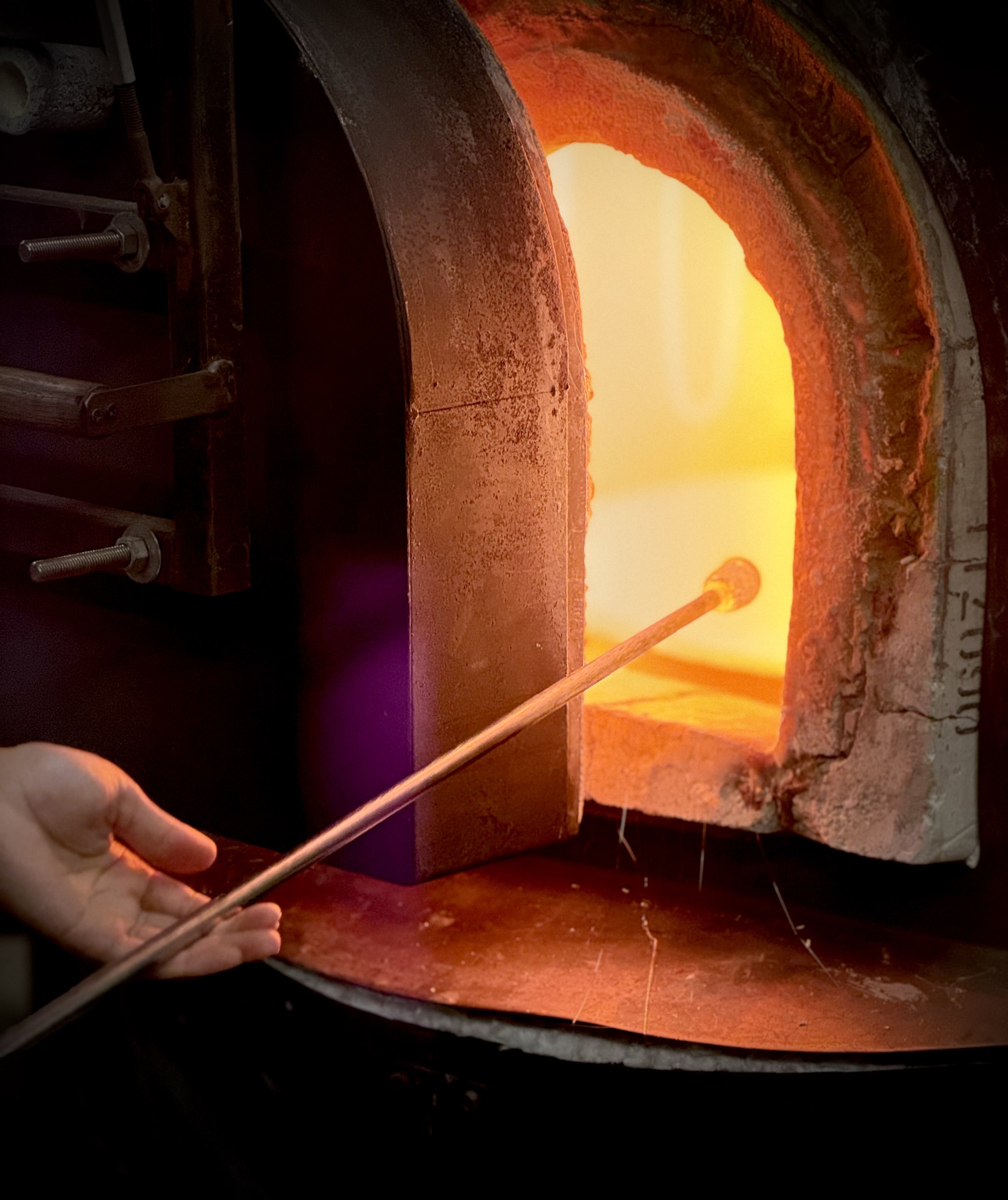
Refractory materials are resistant to heat and retain their strength and stability at high temperatures. They are resistant to thermal shock and can act as a barrier between the glass and the wall of the equipment.
Refractory materials are important in studio glass equipment because they protect against corrosion, provide thermal insulation, and prevent erosion.
Zirconia refractories are often used in glass art studio equipment because they have low reactivity with molten glass.
Silica refractories are also used often because they maintain their hardness under high temperatures.
What is the difference between Insulation and Refractory?
The main difference between insulation and refractory is their intended use and application.
Insulation blocks heat transfer and focuses on energy efficiency while refractory materials are mainly used for their resistant and protective properties.
Insulation materials are typically lightweight and porous while refractory are denser and have a controlled-pore structure.
It is important to utilize both materials in studio glass equipment designs because this balance will maximize energy efficiency, increase glass quality, while also maintaining performance and integrity under extreme temperatures.
Hard Brick vs.
Soft Brick
Refractory bricks can be described as either hard or soft based on their composition and application.
Hard bricks are more dense than soft bricks. They are mainly made from alumina, magnesia, and/or silica formed by high pressure molding, drying, and high-temperature sintering. Hard bricks have high thermal conductivity which makes them less effective as insulators but are fire resistant which makes them useful in places that experience high mechanical and chemical stress.
Soft bricks are known as Insulation Fire Brick (IFB) because of their lightweight and porous structure. They are made from refractory clay, alumina, and organic filling. Soft bricks have low density, low thermal conductivity, and are often used to insulate studio glass equipment because they can easily be cut and shaped to fit into specific spaces such as the Furnace Crown.
What is Castable?
Also known as Refractory Castable, this non-metallic material harden without heat and are known for their heat resistance and thermal insulation properties.
Castable exists in a dry form and creates a cement-like consistency when mixed with water. They vary in density and application and can be molded into different shapes and sizes according to the needs of the equipment design.
Vermiculite, Perlite, Mizzou, and Kaolite castable are often used in studio glass equipment because of their ability to absorb radiant heat and keep the heat where it belongs- inside the equipment.
Impacts on Energy Efficiency
The goal is to use less fuel while maintaining the quality and quantity of glass in studio operations. The purpose of studio glass equipment is to achieve and maintain extremely high temperatures so as to melt glass and work with it at its molten state.
Efficiently designed equipment utilizes a balance between insulation and refractory. Insulation reduces the amount of heat loss while the refractory preserves the integrity of the equipment.
It is important to understand the composition and application of these various materials in order to maximize energy efficiency in studio hot glass art.