The Furnace converts raw materials such as Silica, Sodium Carbonate, and Calcium Carbonate into molten glass by maintaining high temperatures around 2100 degrees Fahrenheit. There are different types of furnaces that are used for different purposes. The main types of furnaces for hot shop glass making studios are continuous melt and batch melt furnaces. They can be electric or powered by gas systems. Explore The Furnace below!
The Furnace
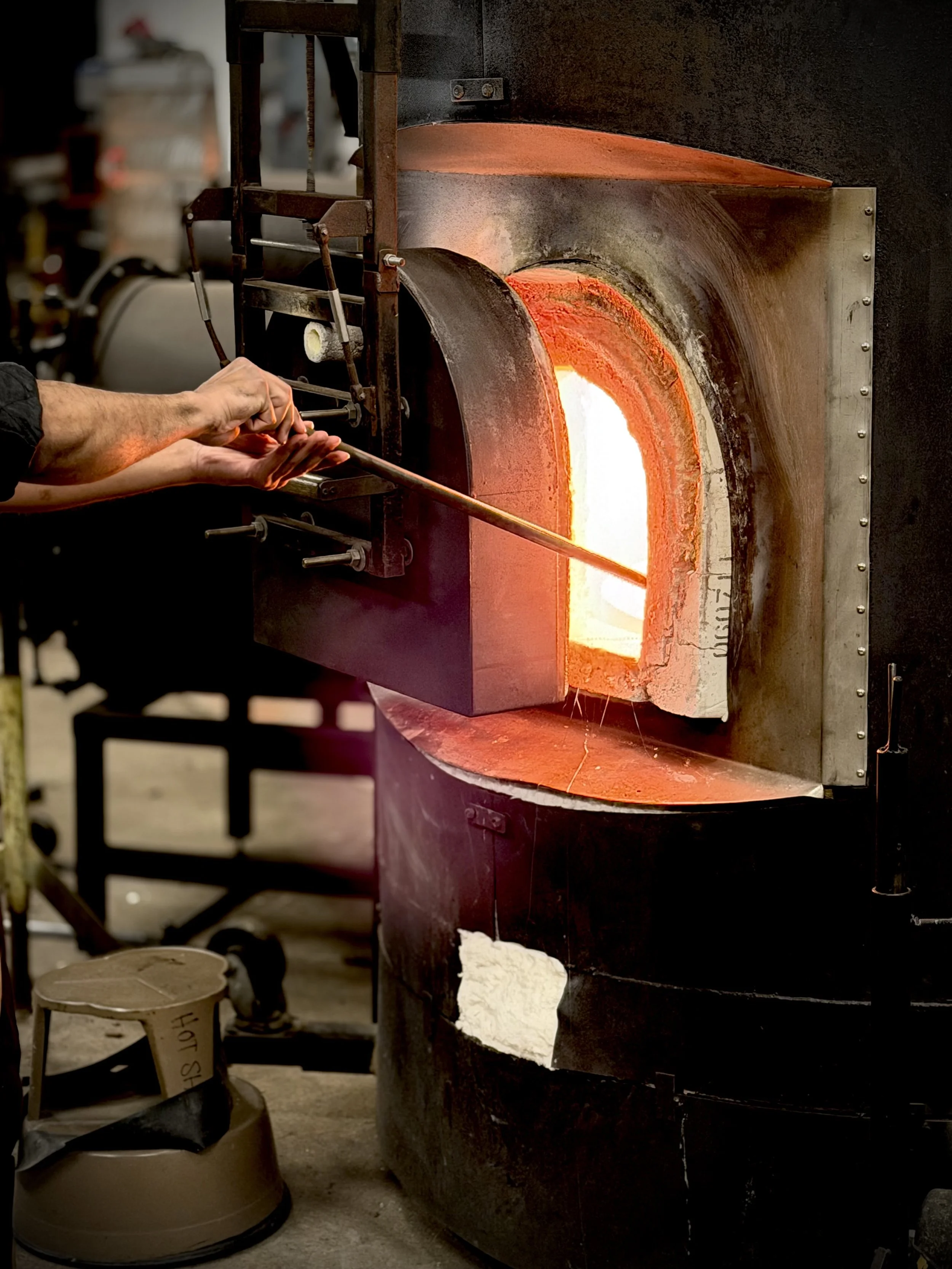
Glass Melting Technology
Melting glass is one of the most energy consumptive aspects of hot shop glass art making and mainly begins inside of The Furnace. It is important to understand your needs in the studio and operate in the most energy efficient way possible by choosing the best suitable studio equipment for your process.
Raw materials such as Silica, Sodium Carbonate, and Calcium Carbonate melt together to create clear glass. Other materials such as copper, cobalt, cadmium, and gold can be added to create colored glass. Each color is made up of its own unique recipe. These raw materials are ground into fine particles and carefully mixed together to create a homogenous “batch” or “cullet” which is melted at high temperatures inside The Furnace.
-
Typically consisting of two sections (the melting tank and the working tank) the continuous melt furnace is designed to be at high temperatures all day and night 24/7 allowing for stable and efficient production.
The melting tank is where the glass is melted and refined. It passes through to the working tank where the glass can be removed for artistic purposes.
This furnace is in comparison with the Day Tank which can melt glass in smaller batches. The same glass recipes can be used for both types of furnaces.
Continuous Melt furnaces are often designed with energy saving technology such as a Flue Damper, Refractory Insulation, and Recuperation.
-
Raw materials such as silica sand, soda ash, and limestone melt together to create clear glass. Other materials such as copper, cobalt, cadmium, and gold can be added to create colored glass. Each color is made up of its own unique recipe. These raw materials are ground into fine particles and carefully mixed together to create a homogenous “batch” which is melted at high temperatures inside The Furnace.
Batch Melting may require the use of toxic chemicals and proper safety procedures must be followed and proper personal protective equipment must be worn at all times when around these chemicals!
-
Functioning through a similar heating process as batch, this method involves putting small chunks of glass called cullet into the crucible of the furnace for melting.
-
All-electric furnaces can be very energy efficient for melting because they create fewer emissions and have lower operating costs.
Learn more about Electric Furnaces Here
-
Understanding what your goals are and what you need to achieve those goals in the hot shop is the first step for efficiency.
You can reduce your energy consumption by only melting the amount of glass you will need for your work, melting at proper temperatures, and utilizing the furnace type that is most suitable for your needs.