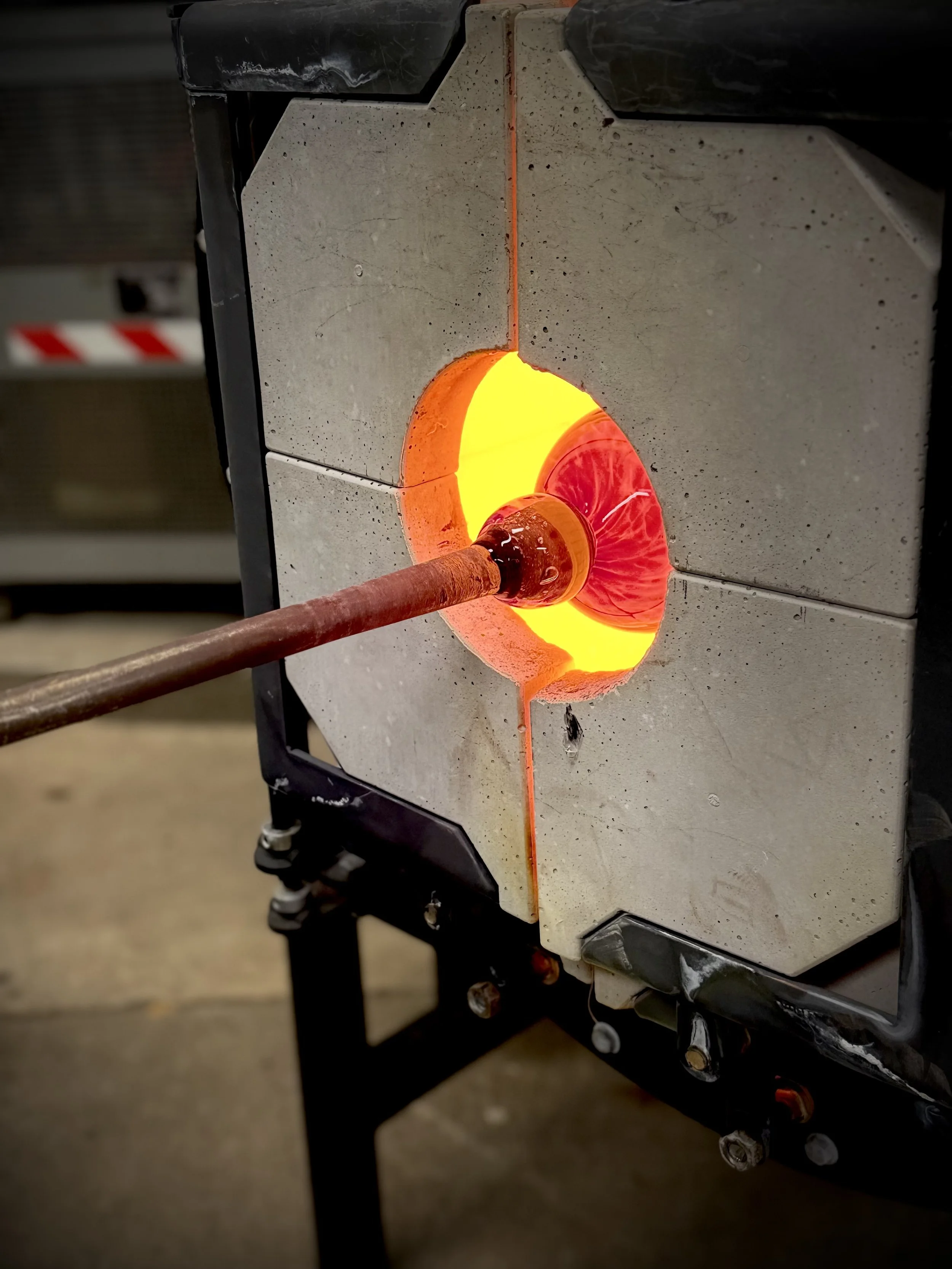
Electric Furnaces
How They Work
Electric furnaces operate by using electric energy as the heat source for melting the glass. Typically silicon carbide or Molybdenum disilicate resistance heating elements are installed inside the furnace walls which generates enough heat energy to reach the extreme temperatures requires for melting glass.
Electric furnaces are usually day tanks or pot furnaces because of their use of crucibles and are insulated using the same refractory materials as traditional gas furnaces.
Benefits
Electric Furnaces can be energy efficient because they achieve thermal efficiencies significantly lower than flame furnaces
Can be controlled automatically with more ease than gas-powered systems
Time required to reach melting temperatures from a cold state is significantly less than traditional furnace designs
They do not produce exhaust gas therefore reducing the amount of air pollution created during the melting process
Without combustion by-products affecting the glass quality and controlled temperature regulation, electric furnaces can produce a more refined glass with higher purity
Reduced energy consumption and potential renewable energy benefits contribute to electric furnaces being a cost-effective alternative to gas powered equipment. (Electricity costs vary according to location)
Contemplations
Electricity can be expensive in many areas
The lifespan of core refractory materials has been noted to be shorter than in traditional gas-powered furnaces
Dual-circuit power supplies and backup generators are often required to account for possible temporary power outages and voltage fluctuations, which can lead to higher initial investment costs
Electrode and element maintenance and replacement require electrical system inspections from professional teams with high training and expertise
Important Things To Know
Electricity Creates Heat
Electricity generates heat through resistive heating. When an electric current flows through the elements inside the furnace, the electrons gain energy resulting in heat. Electric furnaces use direct joule heating and resistive elements to generate high temperatures for glass melting.
The Joule Principle
Joule's Law states that the heat produced by an electric current passing through a conductor is directly proportional to the resistance of the conductor and the square of the current. This principle describes how electrical energy is converted into heat and how that heat interacts with matter, in this case molten glass.
Molybdenum Electrodes
Molybdenum electrodes have an extremely high melting point and are excellent electricity conductors so they are typically used to line the inside of the furnace to generate heat.
Learn More
Explore our Resources Page to find texts and articles about Electric Furnaces and other interesting aspects of hot glass art making