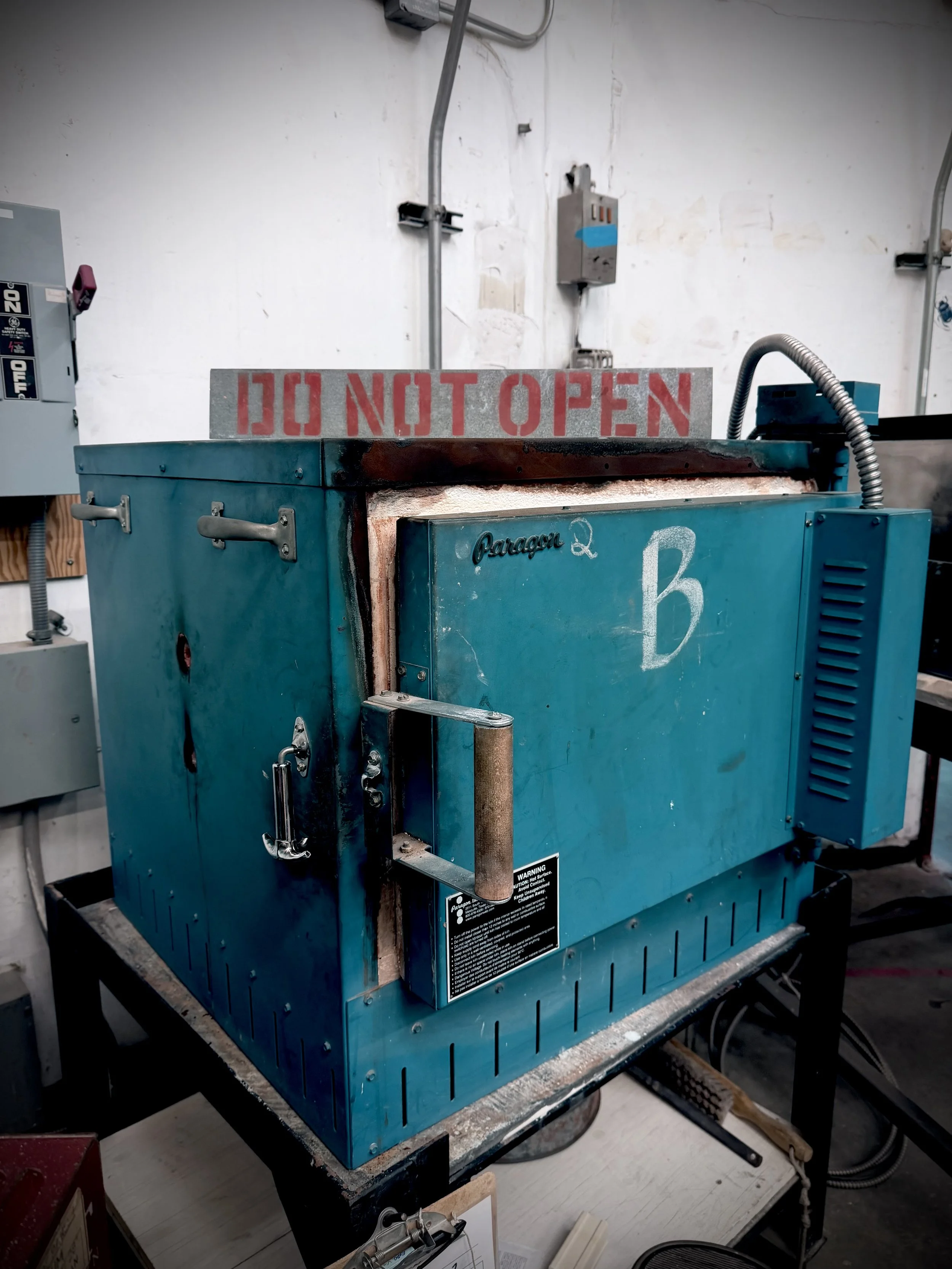
The Annealer (Kiln)
Glass must be systematically cooled down at a slow rate in order to reduce thermal stress and prevent cracking through a process called Annealing.
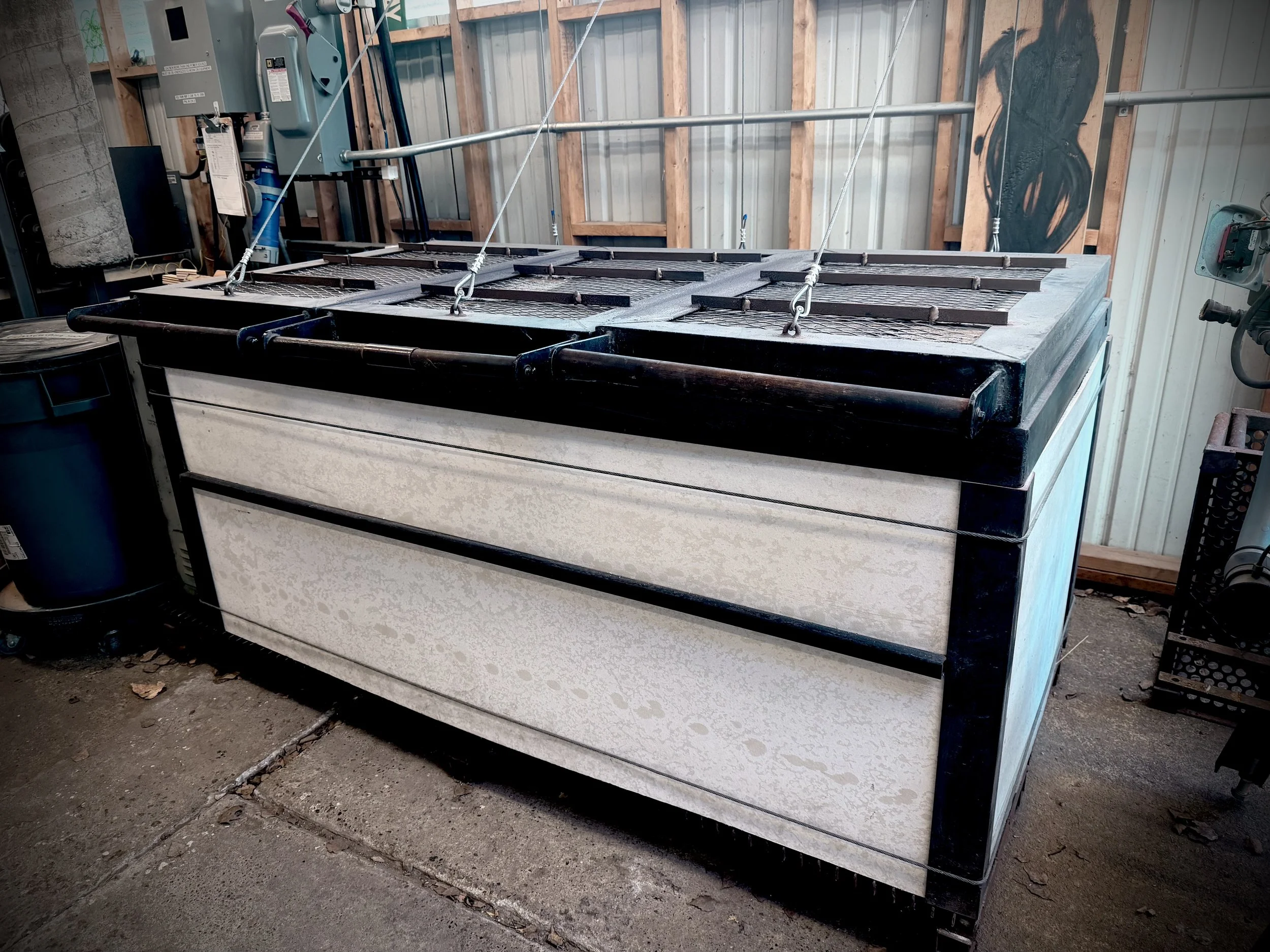
What’s the difference between an Annealing Oven and a Kiln?
The main difference is the desired purpose and corresponding temperature ranges required to achieve those results. Both have the ability to hold consistent heat for long controlled periods of time. They most often feature digital controllers and sealed heat chambers.
Annealing is the process of slowly and systematically cooling of the glass so as to avoid thermal stress, shock, and cracking.
-
In order to avoid thermal shock, molten glass must be systematically cooled in a controlled manner inside of a kiln.
Annealing reduces the amount of strain and internal stress in the glass thus enhancing its durability and stability.
-
A thermocouple is an important temperature sensor that can help determine the temperature inside of a working kiln.
They are made from two dissimilar metal wires joined at one end forming the “hot junction” while the other end is connected to a measuring instrument forming the “cold junction”.
There are many types of thermocouples but the most common used in glass making are Type K.
-
Kiln controllers are typically powered by electricity and are essential for measuring the temperature and power of kilns.
They work by interpreting information from the thermocouples and relaying this information to the relays which control the heating elements. The controllers send signals to close or open the circuit which allows the kiln to warm up or cool down.
Automatic controllers are most popular in glass making because it allows the user to enter a Firing Schedule in advance in which the controller executes without the artist having to manually adjust the temperatures.
-
Glass art making inside of a kiln is often a very precise and complicated process that requires a multiple step “Firing Schedule”.
The firing schedule consists of steps regarding temperature, rate of temperature change, and hold time of specific temperatures.
A typical firing schedule will include a ramp up to a specific working temperature, a hold at that temperature, and then an annealing cycle to properly cool down the glass.
Bullseye Thick Slab
Annealing Chart
It is important to slowly cool glass according to its strain points in order to reduce stress and prevent cracking. The thickness of your glass will affect the Annealing Cycle.