Glass Melting
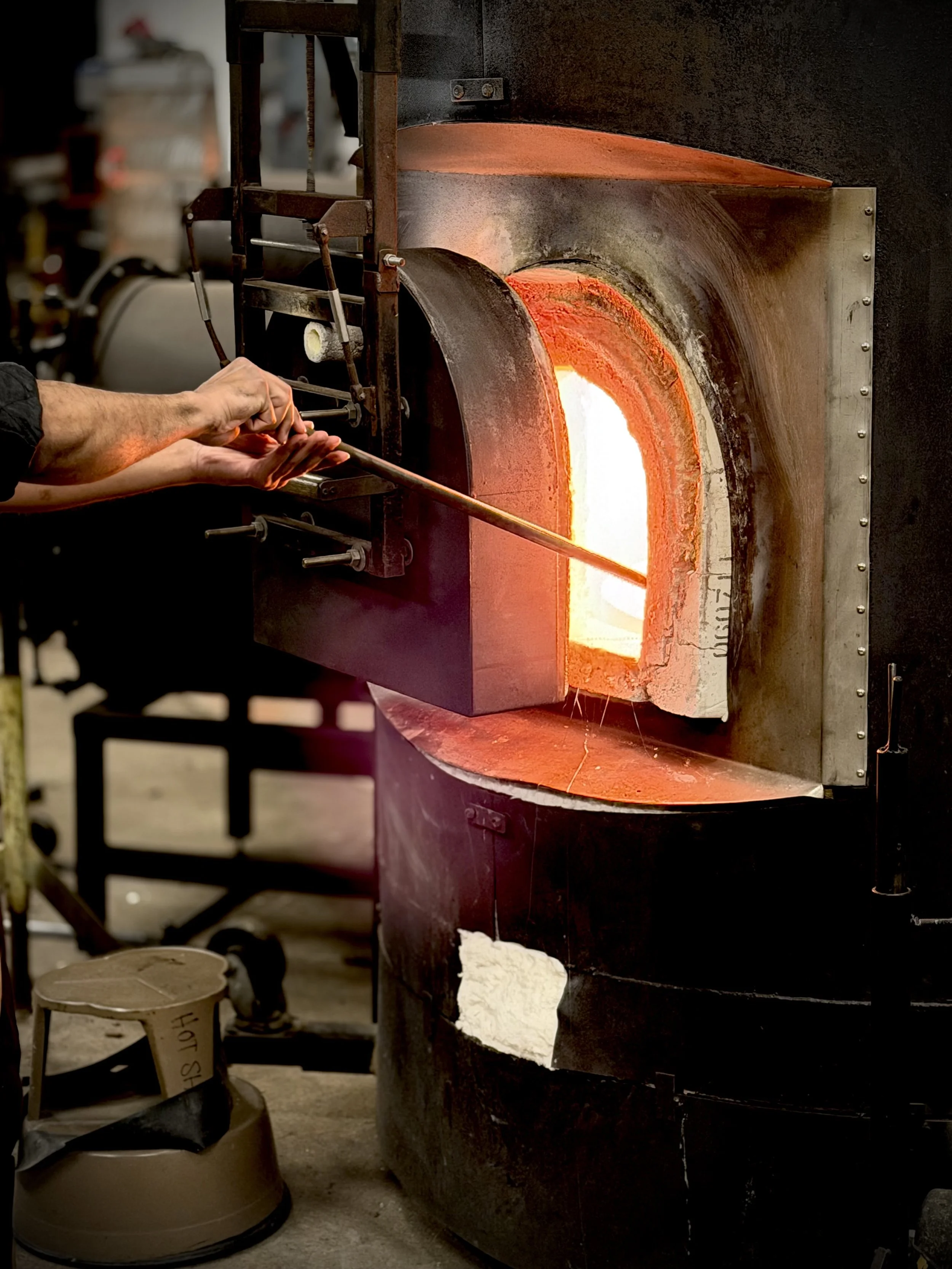
Glass melts at extremely high temperatures and often takes hours to homogenize into a conditioned pot of molten glass ready to be manipulated into glass art.
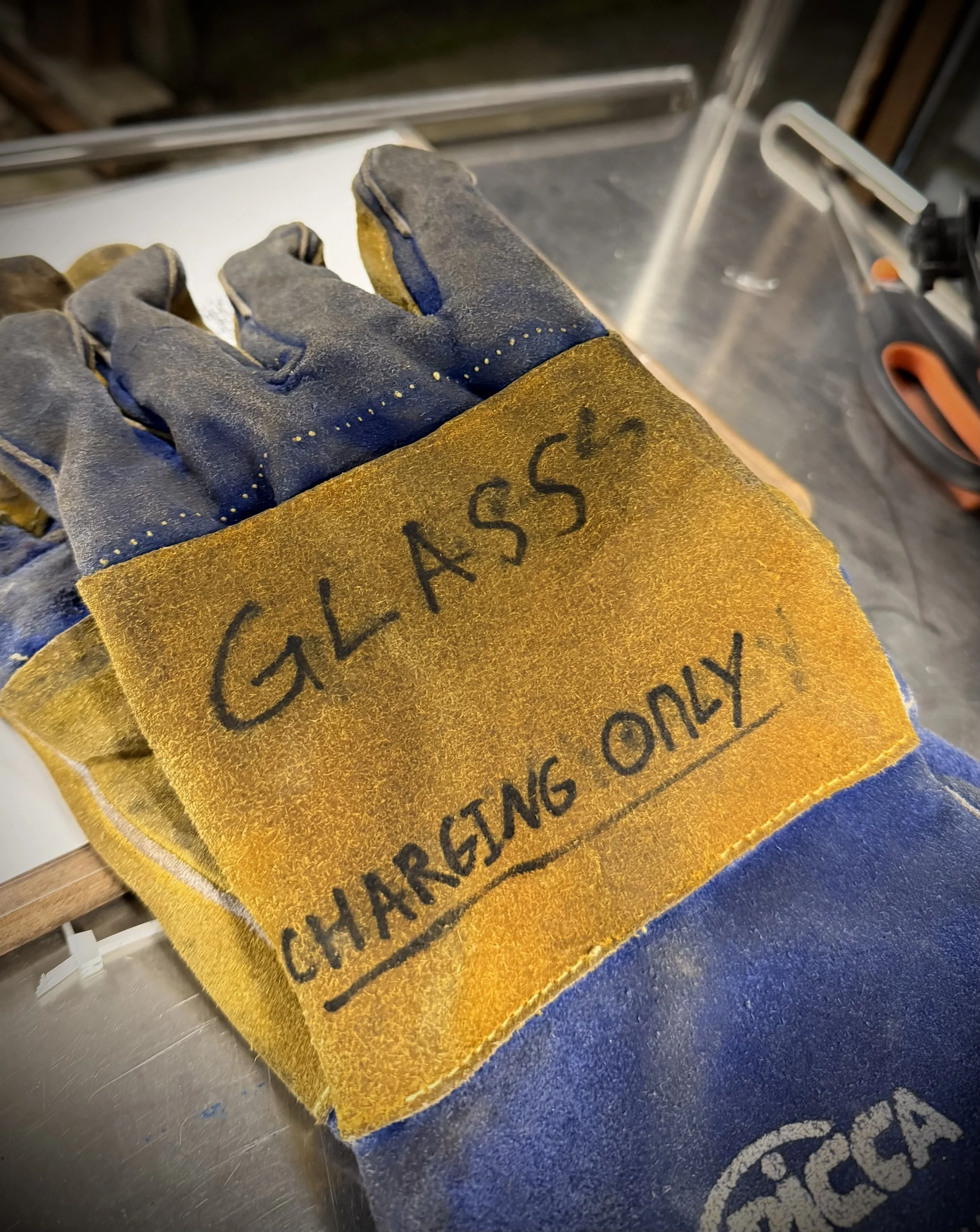
The act of putting pre-made chunks of glass into the Furnace for melting is called Charging.
Batch Melting may require the use of toxic chemicals and proper safety procedures must be followed and proper personal protective equipment must be worn at all times when around these chemicals!
Batch Melting may require the use of toxic chemicals and proper safety procedures must be followed and proper personal protective equipment must be worn at all times when around these chemicals!
How It Works…
A glass former, a flux, stabilizer, aka batch or cullet are melted together at high temperatures to create clear glass. Metal Oxides and other chemical compounds are added to create colored glass.
The process involves melting, fining, homogenization, and conditioning in order to create a material suitable for creating glass art.
Read More about the Melting Process HERE in an article by Liam Cope, the founder of the site EngineerFix.Com
-
Metal Oxides and Compounds such as copper, cobalt, cadmium, and gold are mixed together with the basic ingredients silica sand, soda ash, and limestone using precise recipes to create beautiful batches of opaque and transparent colored glass.
-
Some glass will appear pale and colorless when in its cold sheet form but when brought to high temperatures the color will “strike” and change to a much different color. This process involves the metal oxide particles added to the glass to dissolve and grow into crystals at the surface. The size of these crystals determines the color because the smaller wavelengths reflect yellow while the larger crystals reflect purples, blues and greens.
Striking colors can vary depending on temperature, atmosphere, history of heat, and amount of times heated.
-
Different than traditional furnace “soft” glass, borosilicate (Boro) glass has boron trioxide added to its recipe which creates increased heat resistance and durability.
It has a low coefficient of expansion which makes it relatively resistant to thermal shock. This makes Boro glass perfect for scientific equipment and cookware.
Because Boro glass melts at higher temperatures than Soft glass, it is often melted from rods at a stationary flame versus being melted in batch in a furnace and blown in the hot shop studio.
-
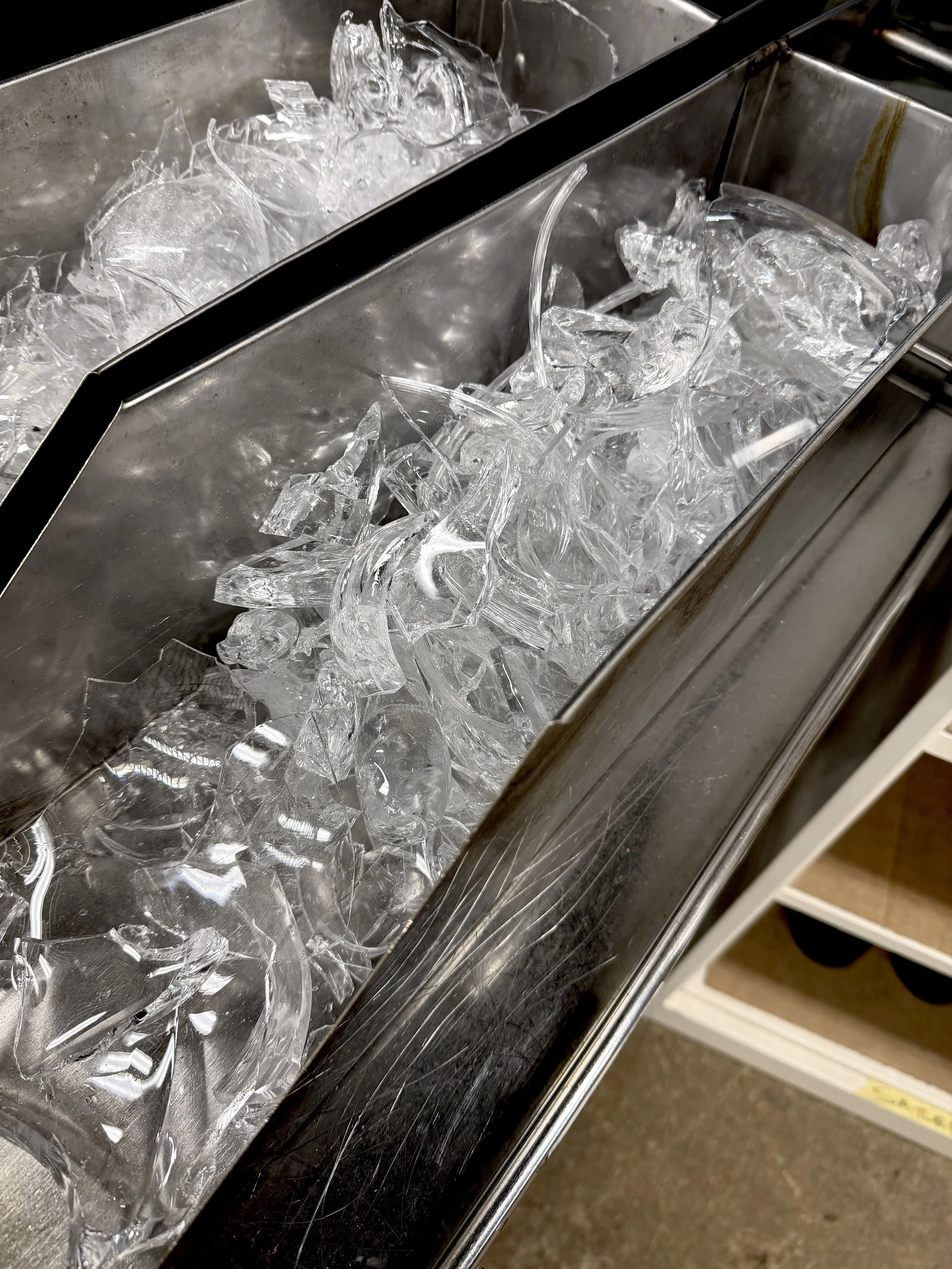
Recycled glass that has been cleaned, sorted, and crushed into small, uniform pieces for reuse in the production of new glass.
Cullet is charged, or loaded, into the furnace at high temperatures of around 2300 degrees Fahrenheit and melted for at least 10-12 hours.
“Glass is the harmonious connection between color and transparency.” – Lino Tagliapietra