Furnace Types

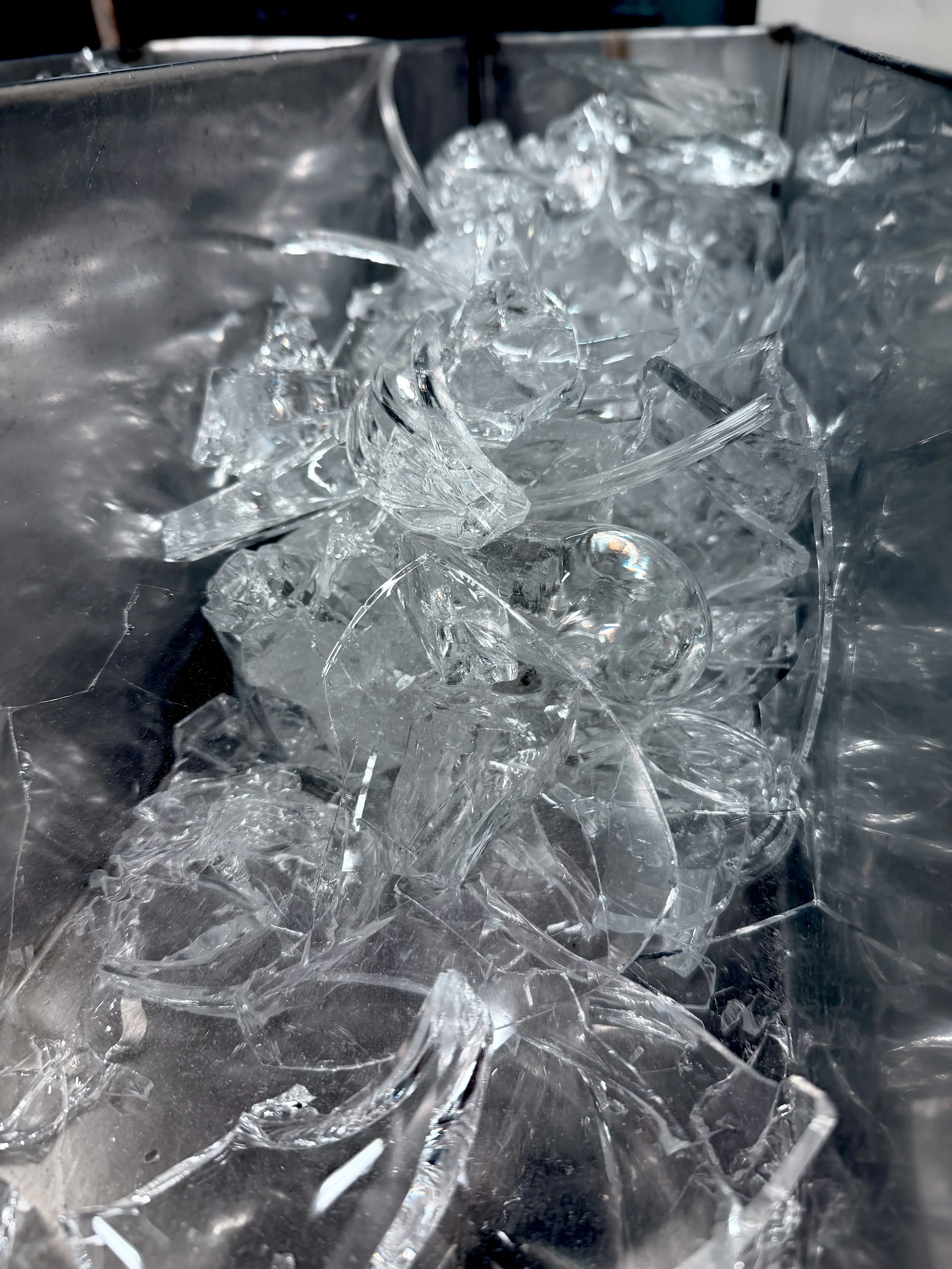
Day Tank Furnaces
These furnaces are typically smaller, more flexible and versatile than continuous melt furnaces and allow for periodic operation. The structure is similar to its counterpart but instead of a passage between tanks, there is a singular tank with openings for loading and removing molten glass.
These furnaces are designed for studios without the demand or space for a large-scale continuous melt furnace. They are typically lined with Insulation and Refractory to maintain such high temperatures.
Often the pot or crucible will be invested into the furnace to prevent the glass from leaking out if the pot cracks.
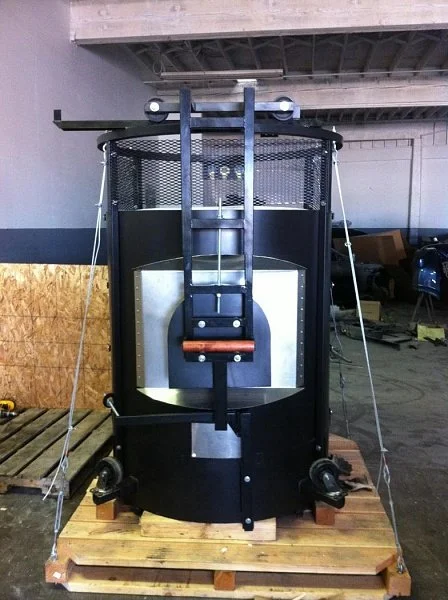
Continuous Melt Furnaces
Typically consisting of two sections (the melting tank and the working tank) the continuous melt furnace is designed to be at high temperatures all day and night 24/7 allowing for stable and efficient production.
The melting tank is where the glass is melted and refined. It passes through to the working tank where the glass can be removed for artistic purposes.
This furnace is in comparison with the Day Tank which can melt glass in smaller batches. The same glass recipes can be used for both types of furnaces.
Continuous Melt furnaces are often designed with energy saving technology such as a Flue Damper, Refractory Insulation, and Recuperation.
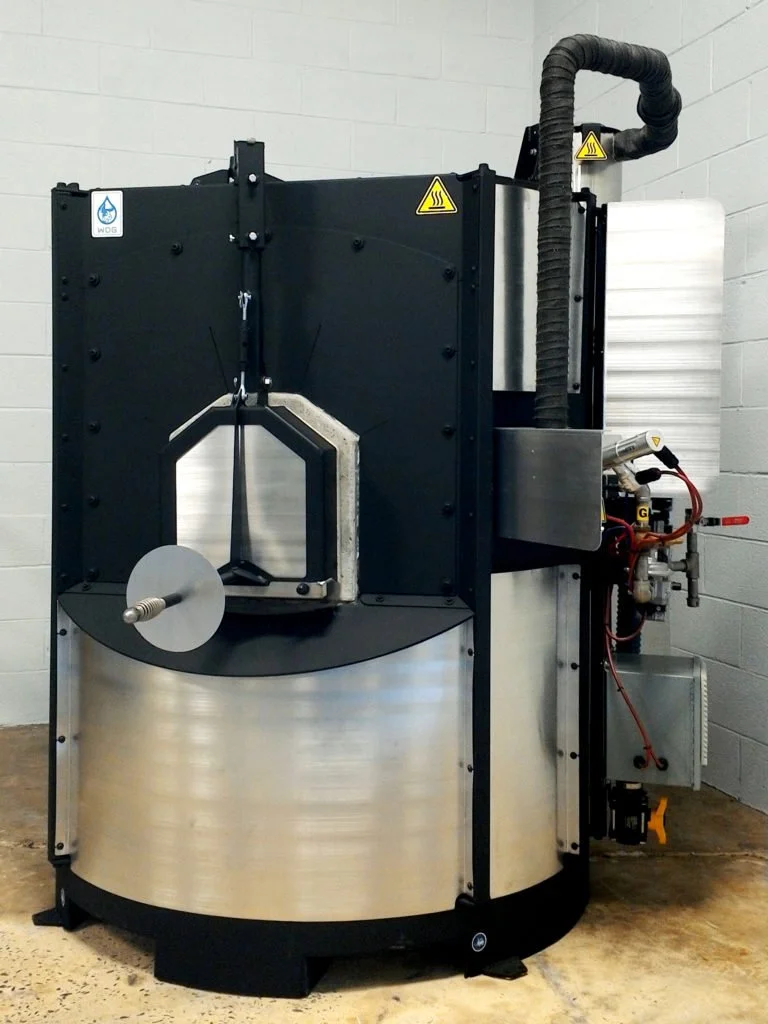
Free Standing Pot Furnace
Inside these furnaces is a large round ceramic crucible (Pot) designed to withstand high temperatures to melt and hold molten glass.
Pot Furnaces are typically smaller than the other two designs are used often in batch melting of colors because the crucible can be changed out more frequently.
These furnaces are great for small scale art studios and community learning environments.
Learn More
Knowing the proper furnace design for your studio operations is important because choosing the right size can maximize efficiency in regard to energy consumption and the amount of glass melted and used. Energy efficiency can also be achieved through knowledge of the melting process.
Learn More about the MELTING PROCESS HERE