Recuperation
Below you will find a list of information in the forms of JPG, PDF and linked articles about RECUPERATION and energy efficiency.
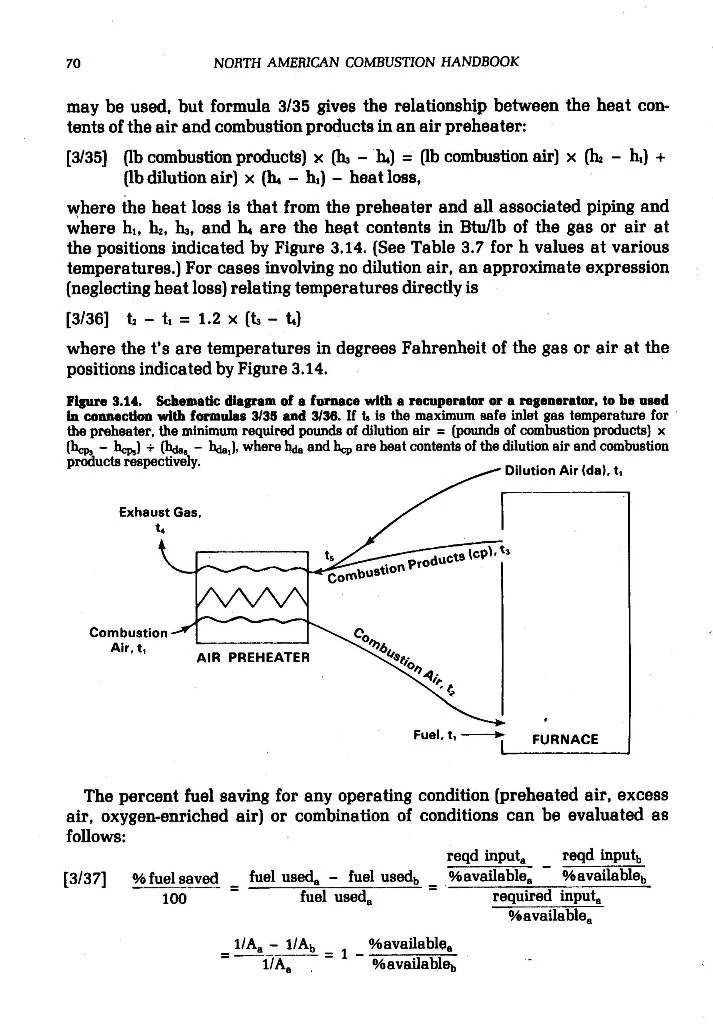
This is a page from "North American Combustion Handbook: A Basic Reference on the Art and Science of Industrial Heating with Gaseous and Liquid Fuels, Vol. 1." showing the Percent Fuel Savings formula. There are 2 volumes. Anyone interested in this line of work should use these essential books as reference. Together they hold over 700 pages of information on this subject!
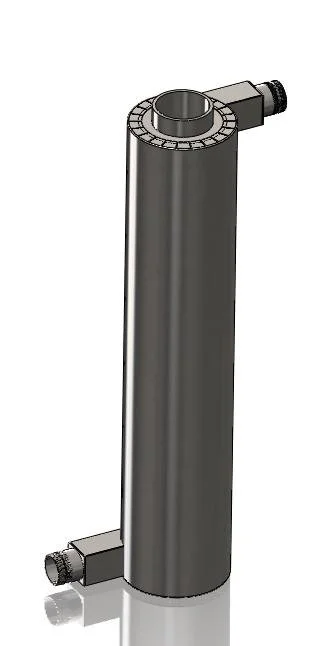
This is a 3D model rendering of a recuperator by Wet Dog Glass. Hot exhaust flows upward through the straight inner pipe. Fresh air circulates around the inner pipe collecting heat as it flows through the outer chamber which is sealed from mixing with the exhaust gases that are essentially depleted of oxygen. The outermost surface is a thin stainless steel jacket that conceals the fiber insulation around the outer air chamber.
All Wet Dog Glass gas equipment are designed with energy efficiency in mind. Learn more about Wet Dog Glass equipment Here.
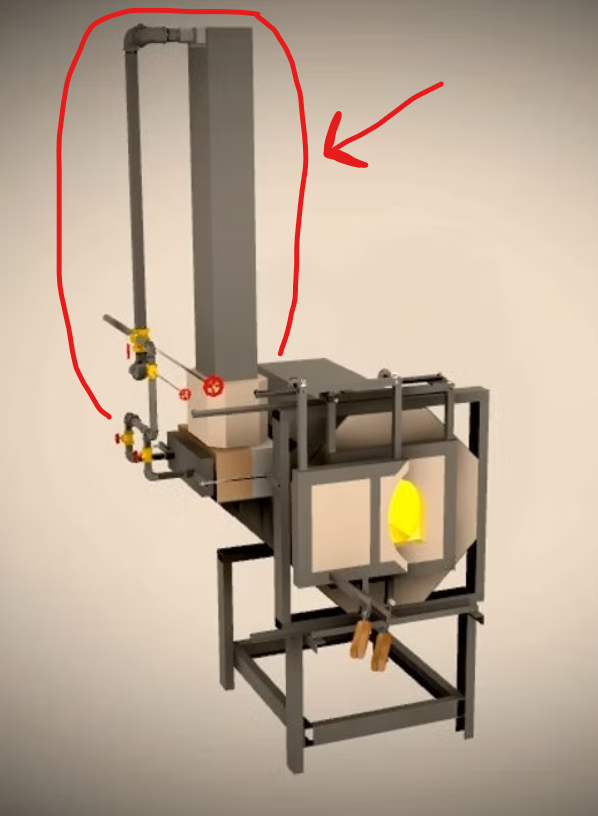
This is an image digitally rendered by Correll Studios depicting a reheating chamber with a recuperator attached. The red arrow is pointing to the recuperator.
This article is written by Charlie Correll from Correll Glass Studios and describes the importance of insulation and recuperation in regard to creating energy efficient hot glass art making equipment. It includes a chart about the Equivalent Inches of Firebrick for various insulation materials and their rate of heat loss. Correll discusses procedures that managed to “cut his gas bill in half without sacrificing anything but a hot, noisy studio”.
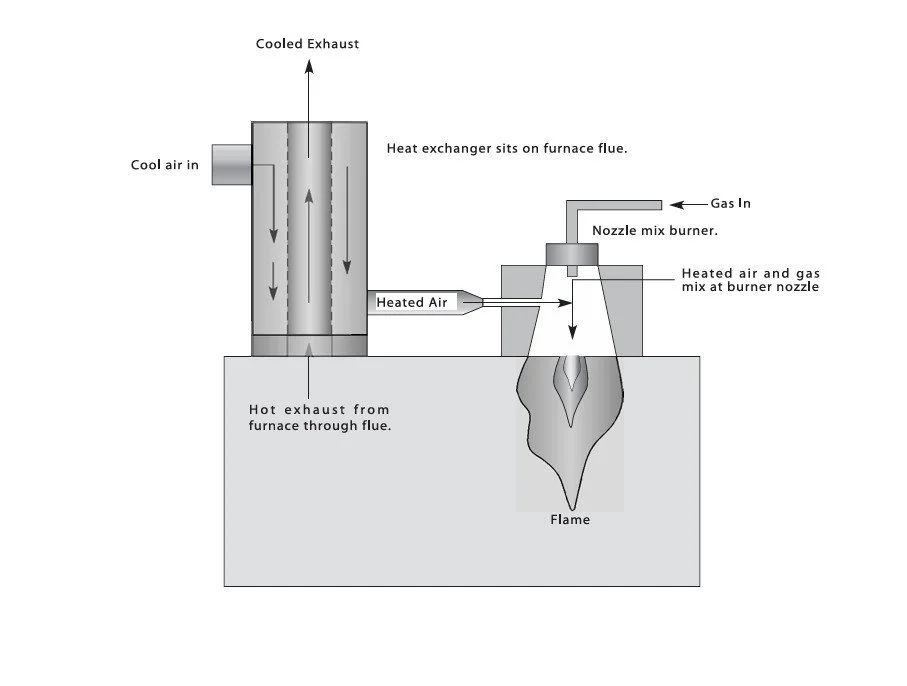
This is a diagram showing the basics of a recuperated system. These systems are attached to furnaces and reheating chambers as a method of improving energy efficiency.
With energy efficiency in mind, this article written by Hugh Jenkins of Big Island Glass describes recuperation and its impact on reducing gas consumption in glass making art studios. It features detailed diagrams about how a recuperator operates, three ways to power recuperators, and two stack designs. It also features a chart detailing the jets, gas pressure, and propane consumption for several recuperator installations, pre and post retrofit. Lastly it describes the ways to maintain a recuperation system.