Correll Glass Studio
Correll Glass Studio, founded by Charlie Correll, built his first recuperative glass furnace in 1981 and reduced his energy consumption by a dramatic percentage.
In 1987 Pine Ridge Enterprises introduced their new line of burners. The burner design accomplished three main objectives: efficient fuel consumption, low operating noise level, and long term reliability. Capable of reaching temperatures in excess of 2700 degrees Fahrenheit and whisper quiet, these burners quickly became a favorite with glass factories and hot glass studio artists. In recent years the burners have become increasingly popular with metal artists, blacksmiths, and other industries that require high temperature processes.
After over 20 years, Pine Ridge Burners have earned a reputation for being one of the best built, longest lasting burners on the market. In fact, some of the original burners are still in service. Today there are hundreds of our burners in daily use in over 20 countries world-wide
Most burners on the market are of the “retention tip” type. The fuel/air mixture passes straight through the burner and into the firing chamber. Retention tips do help improve flame stability and give a focused spot heat, but they do little to improve the fuel/air mix and they can be noisy. The Pine Ridge Burner is not a retention tip. The fuel/air mix first enters a chamber called a plenum. This plenum is baffled to further mix the fuel and air. (The better the fuel/air mix, the better the burn). This improved fuel/air mix then exits the plenum through a series of alloy steel metering orifices. The metering orifices accurately supply the fuel/air mix to a honeycomb of larger delivery orifices in the burner head. Burning the fuel through many orifices spreads the heat out evenly over a wide area. It also makes the burner very quiet. The Pine Ridge Burner is often referred to as a “ribbon burner” because it creates a “ribbon” of flame.
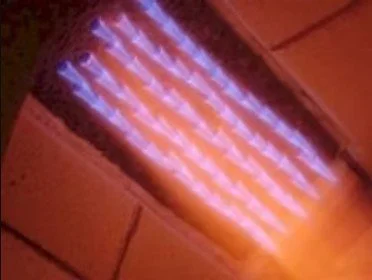
This is an image of a Pine Ridge Burner being used to power a piece of hot glass art equipment.
Equipped with these burners and a Recuperator System, Correll Glass Studios has developed a line of invested and free-standing pot furnaces and reheating chambers for independent studio uses.
The equipment is expertly insulated with soft fire brick liner and ceramic fibers to ensure maximum energy efficiency.
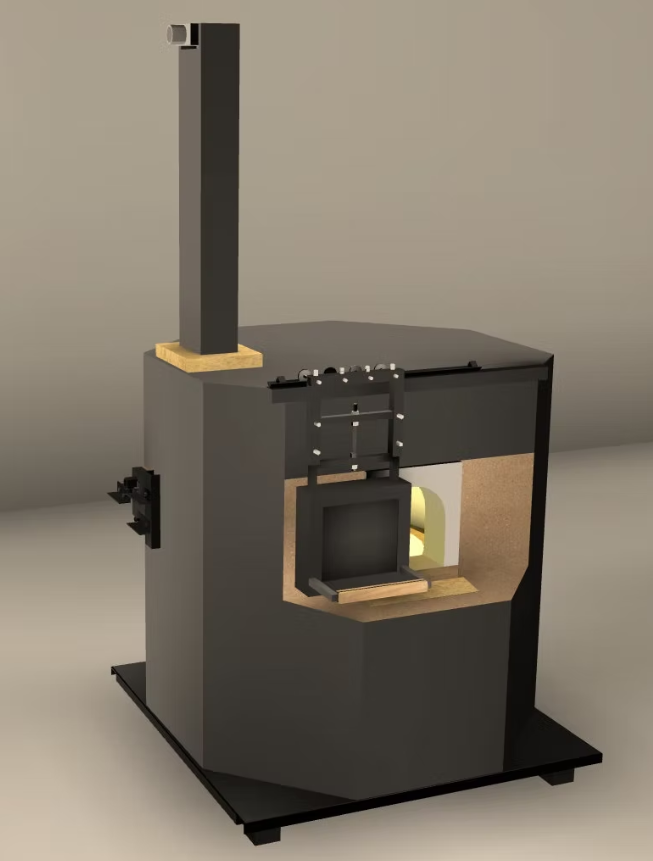
This is a rendered image of a Correll recuperated free-standing pot furnace with the door propped open.
Explore articles written by Charlie Correll on their website HERE or by clicking the buttons below
Charlie Correll resides on the East Coast and can be contacted via email at Ccorrell@comcast.net or via phone at (413) - 369 - 4283